
Multicam Interviews with Multiple Subjects: Key Production Considerations
Shooting a multicam interview with more than one subject introduces a set of technical and storytelling challenges that are easy to underestimate. For any Denver video production team or production company focused on high-quality interviews, careful planning around lighting, camera placement, eyelines, and audio capture is essential to creating footage that cuts cleanly and feels natural in the edit.
Lighting Consistency Is Critical
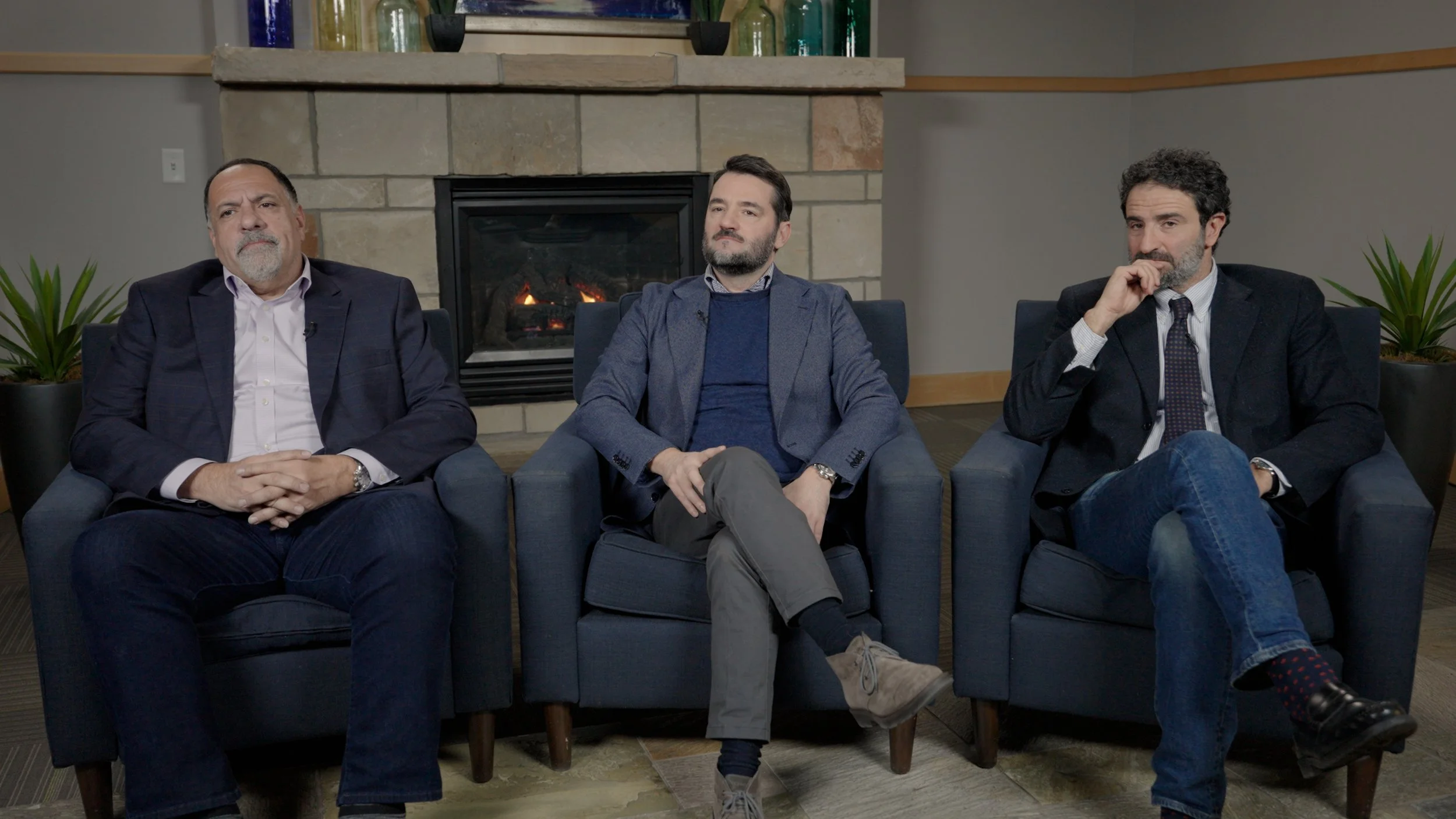
Even lighting levels across all interview subjects is one of the most important considerations in a multicam setup. In professional videography, this usually requires large, soft light sources positioned near the sides of each camera. Soft sources help maintain flattering skin tones while minimizing harsh shadows that become more noticeable when cutting between angles.
When subjects are positioned at varying distances from a light source, it is critical to reduce the light level on those closest to the fixture. Without control, these subjects can appear noticeably brighter than others. This can be addressed by using flags to cut light selectively, or by attaching nets directly to the light fixture to reduce output without changing the quality of light.
Eyeline Decisions Drive Camera Placement
Eyeline is a foundational decision that must be made before cameras are placed. Any experienced production company understands that the interviewer must determine where the subjects should look, as this choice directly impacts how the cameras are positioned and how well shots will cut together.
Subjects may be directed to look at each other, directly into the camera, or toward the interviewer. Each approach has different technical implications.
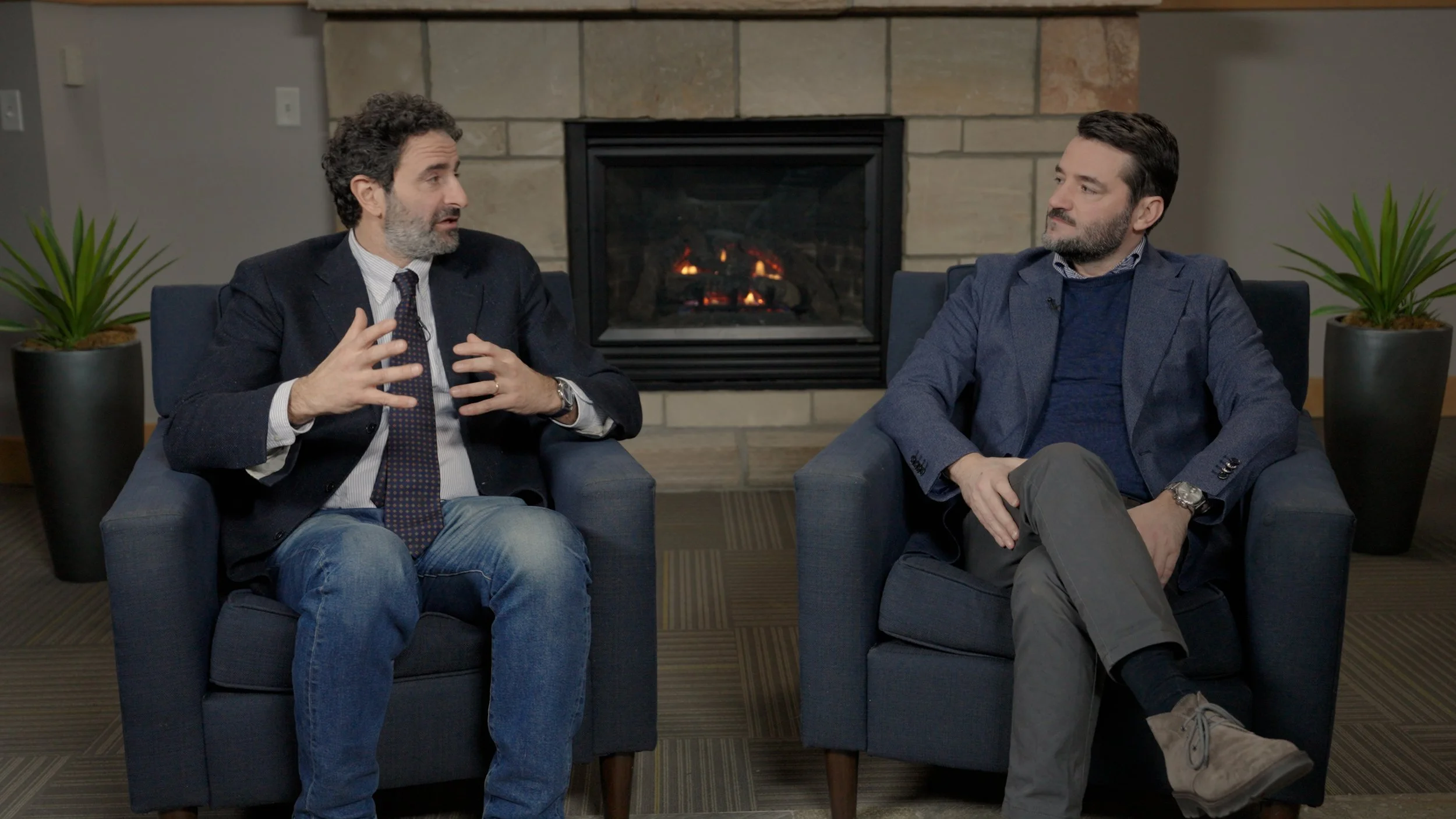
If subjects are meant to look at each other, the center camera should be framed as a locked-off wide two-shot. Side cameras should then cross-shoot to capture close-ups. In this configuration, the camera positioned on the left side of the setup films the subject on the right, and vice versa. This creates strong eyelines that feel natural and consistent when cutting between angles.
If subjects are instead looking toward an off-camera interviewer, cross-shooting should be avoided. In this scenario, cameras must stay aligned with each subject. The camera on the left should film the subject on the left, and the camera on the right should film the subject on the right. Crossing cameras in this setup will result in mismatched eyelines when cutting back to the wide shot.
Encourage Conversation, Protect the Audio
Multi-subject interviews are most effective when participants are encouraged to engage with each other, respond naturally, and build on one another’s thoughts. That conversational energy adds authenticity and depth to interview videography, especially for corporate, nonprofit, and documentary projects.
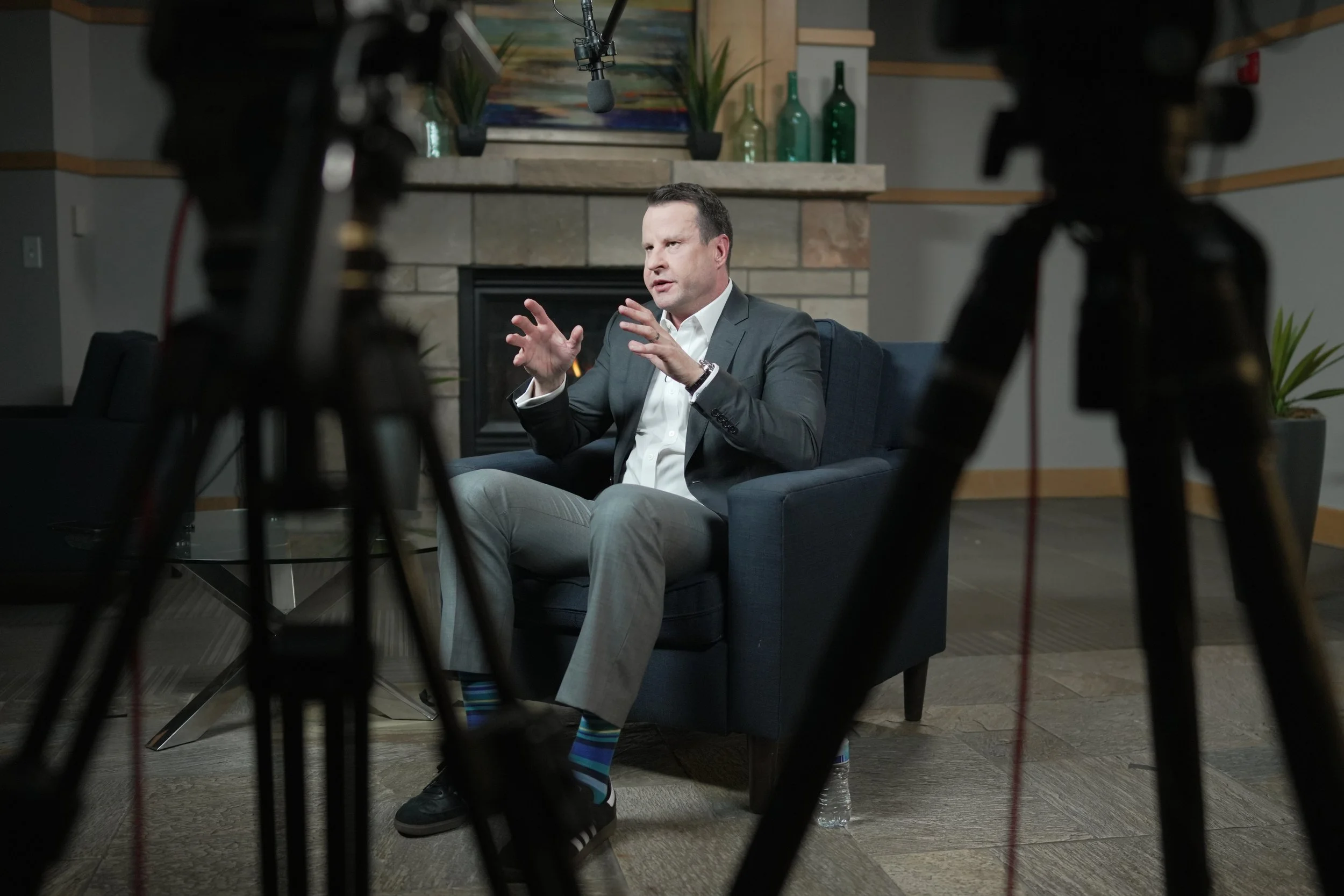
At the same time, it is essential to protect clean audio for key soundbites. Each subject should always be miked individually using lavalier microphones. During the edit, audio can be cut between lav tracks to maintain clarity and consistency.
A boom microphone can be used as a backup or blended subtly into the mix to add room tone and dimension, but it should never replace individual lavs as the primary source for dialogue.
Final Thought
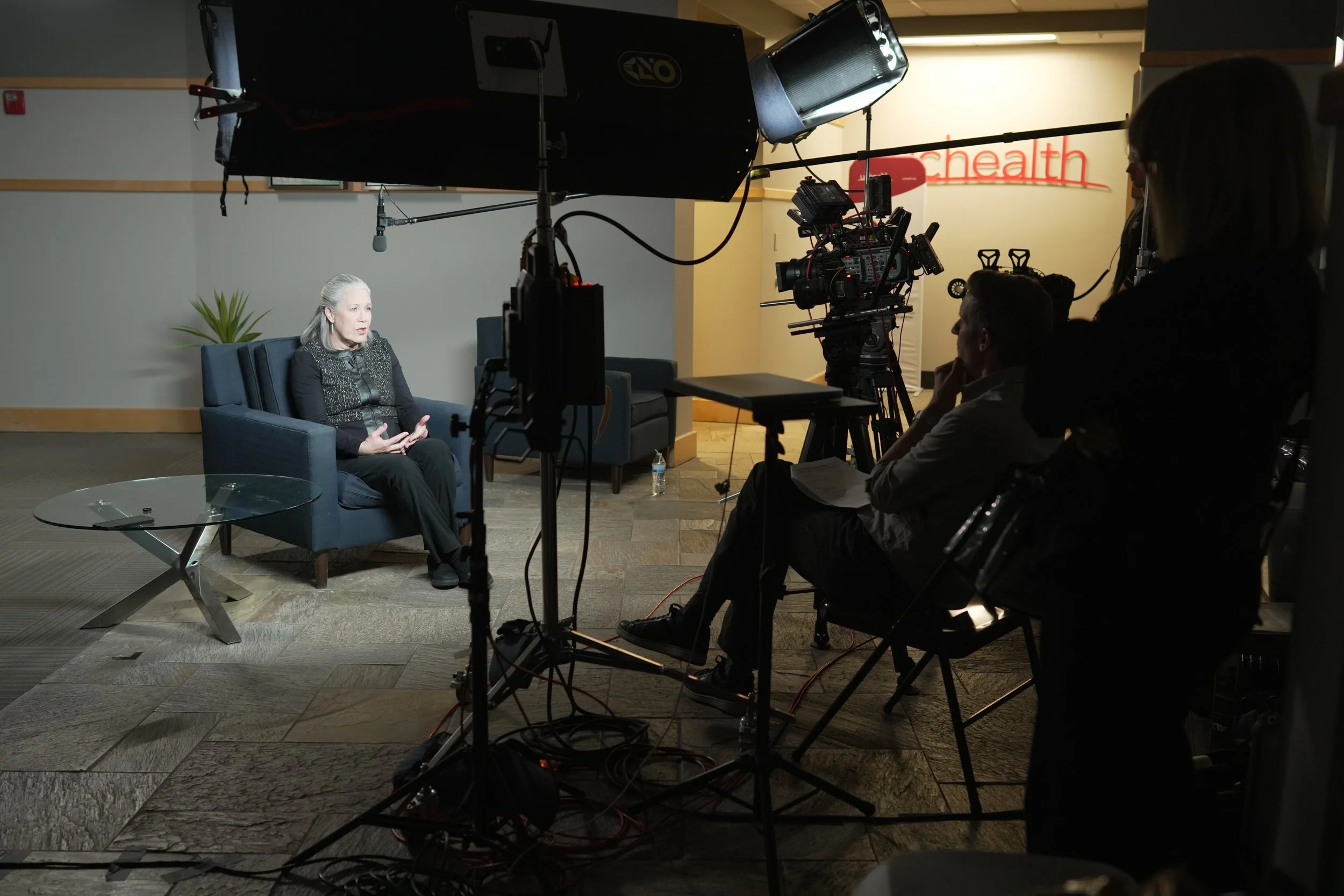
A successful multicam interview with multiple subjects is the result of intentional choices made early in the process. For any Denver video production team delivering professional videography, thoughtful lighting control, disciplined eyeline planning, and redundant audio capture ensure that the edit remains flexible and the final piece feels cohesive, polished, and professional.