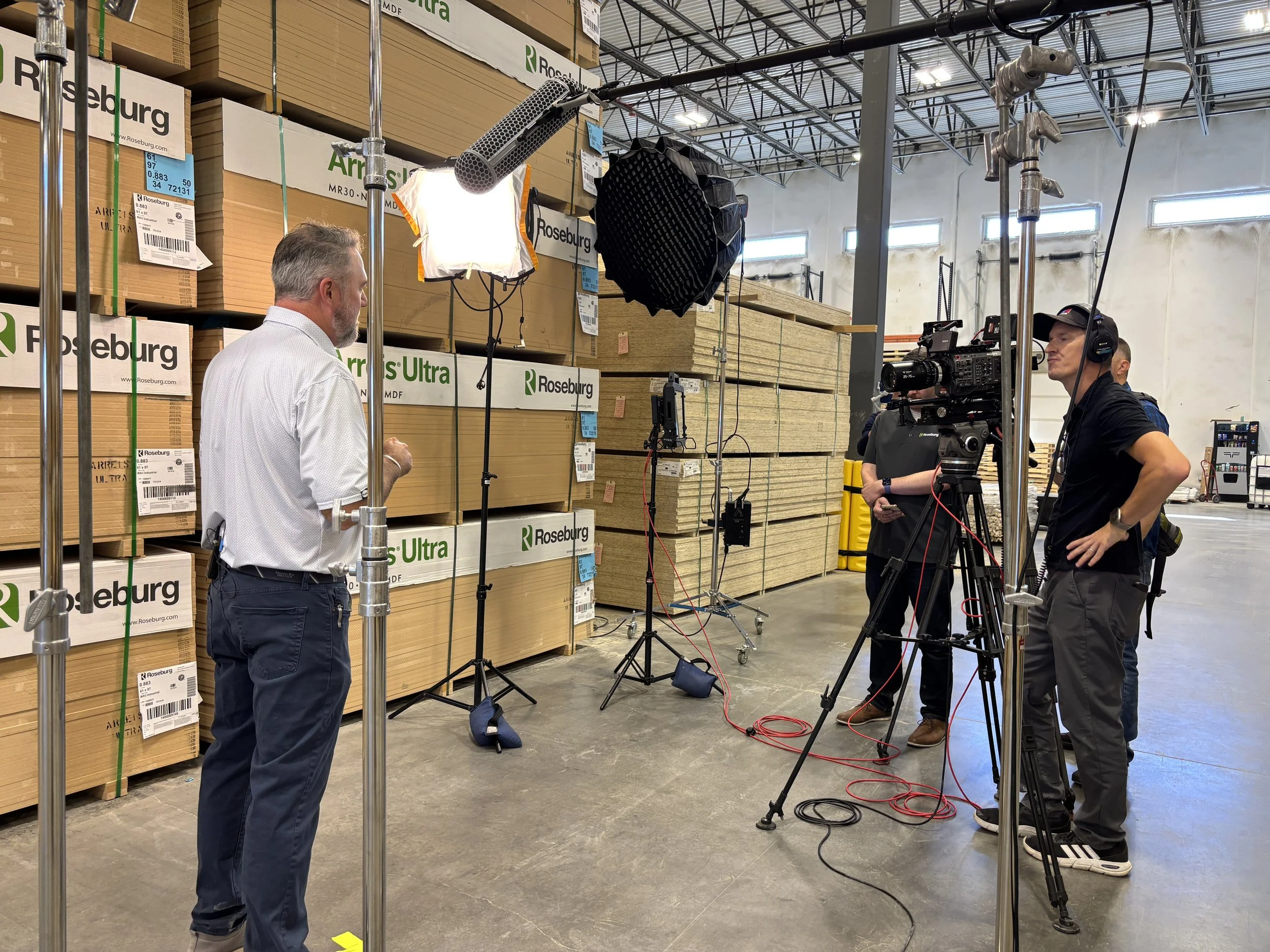
Filming in an Industrial Manufacturing Facility: Safety, Sound, and Lighting Challenges
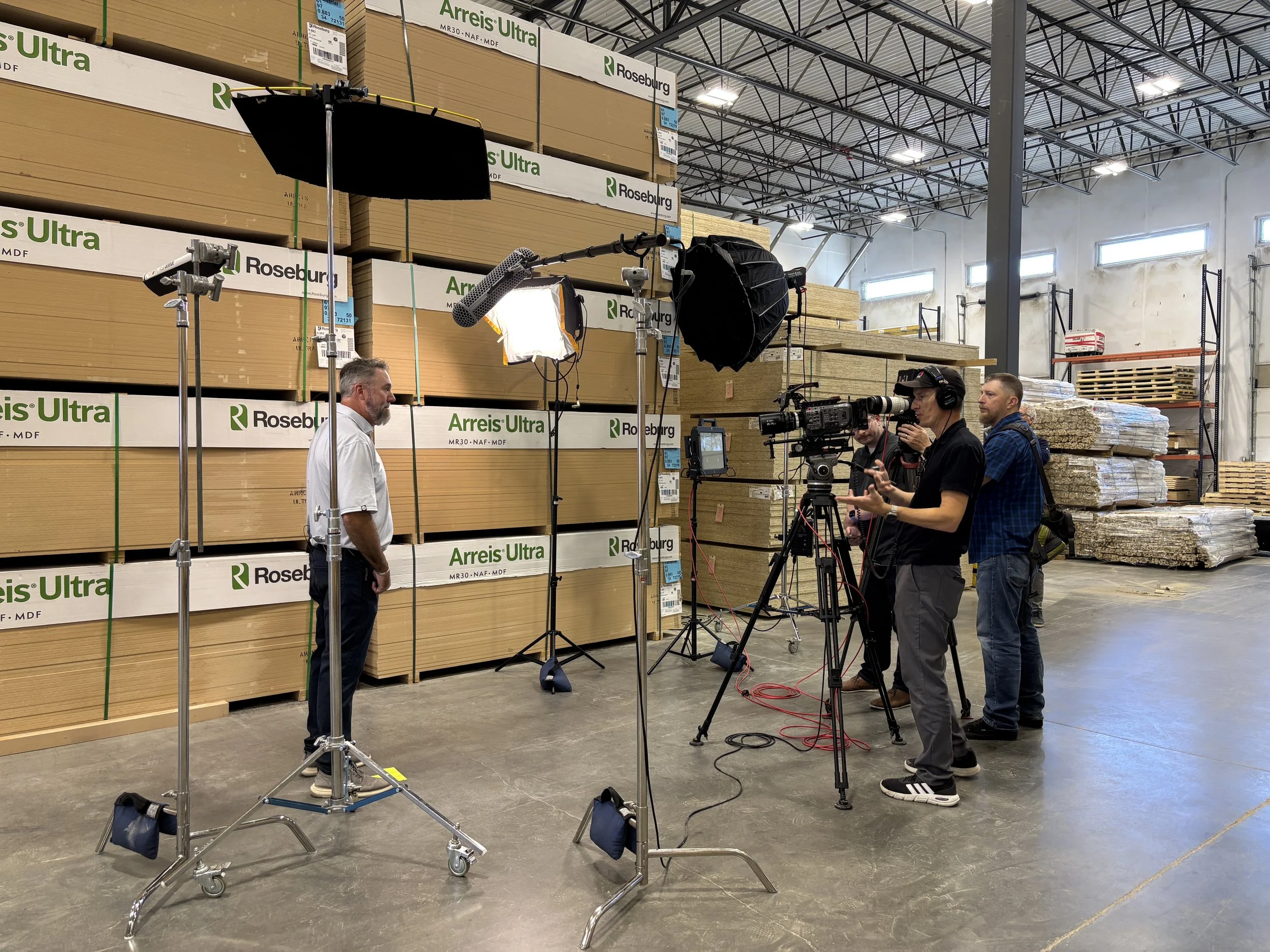
Industrial manufacturing facilities can provide incredible backdrops for corporate video production. Massive machinery, raw materials, and the scale of the operation can create a visually compelling environment that would be impossible to replicate in a studio. But filming in an active manufacturing facility presents some unique challenges, particularly when it comes to safety, audio, and lighting.
On a recent industrial video shoot, our team at Mile High Films had to navigate all three. Here's how we approached the production and adapted when things didn't go quite as planned.
Safety Comes First
Before we could even think about camera angles or lighting, we needed to understand the safety requirements of the facility.
Where could our crew safely operate? Where could we position cameras, lights, and stands? What personal protective equipment (PPE) would we need? Even basic wardrobe considerations, including restrictions on shorts and requirements for closed-toe shoes, needed to be addressed before arriving on location.
Industrial facilities are active workplaces, with heavy machinery, forklifts, and employees moving throughout the space. A video production crew introduces additional people, equipment, and potential hazards into that environment.
Our first priority was making sure we could do our job without putting anyone at risk or interfering with the facility's daily operations.
Finding the Right Interview Location
The next challenge was selecting a location for our on-camera interview.
We wanted a background that communicated the scale and character of the manufacturing operation, but setting up in the middle of the fabrication area would have been both disruptive and extremely noisy.
Instead, we selected a materials storage area. It offered the industrial look we wanted, with plenty of depth and interesting visual elements, while being significantly quieter than the main production floor.
Just as importantly, it was out of the way of forklift traffic and normal employee activity. We could conduct our interview while the facility continued operating without interruption.
Choosing the right interview location is often one of the most important decisions we make during a corporate video shoot. The background needs to look good, but it also has to work from a practical production standpoint.
The Audio Challenge: Lavalier vs. Boom Microphone
Even in the quieter storage area, recording clean dialogue proved challenging.
We started with a wireless lavalier microphone positioned on our interview subject. Although the microphone was aimed toward his mouth, it was also exposed to the enormous, reflective space surrounding him.
The result wasn't great. The lavalier picked up a surprising amount of background noise and the reverberant character of the warehouse.
Fortunately, we were also recording with a boom microphone.
The difference was dramatic. The boom provided much better isolation of the subject's voice, with significantly less ambient noise. The dialogue sounded fuller, more focused, and much more natural.
This is exactly why we prefer recording interviews with multiple microphone options whenever possible. A lavalier may be the perfect solution in a controlled office environment, but in a cavernous industrial facility, a properly positioned boom can produce dramatically better results.
The lesson? Never assume one microphone will work best in every environment. Listen carefully, compare your options, and make decisions based on what you're actually hearing.
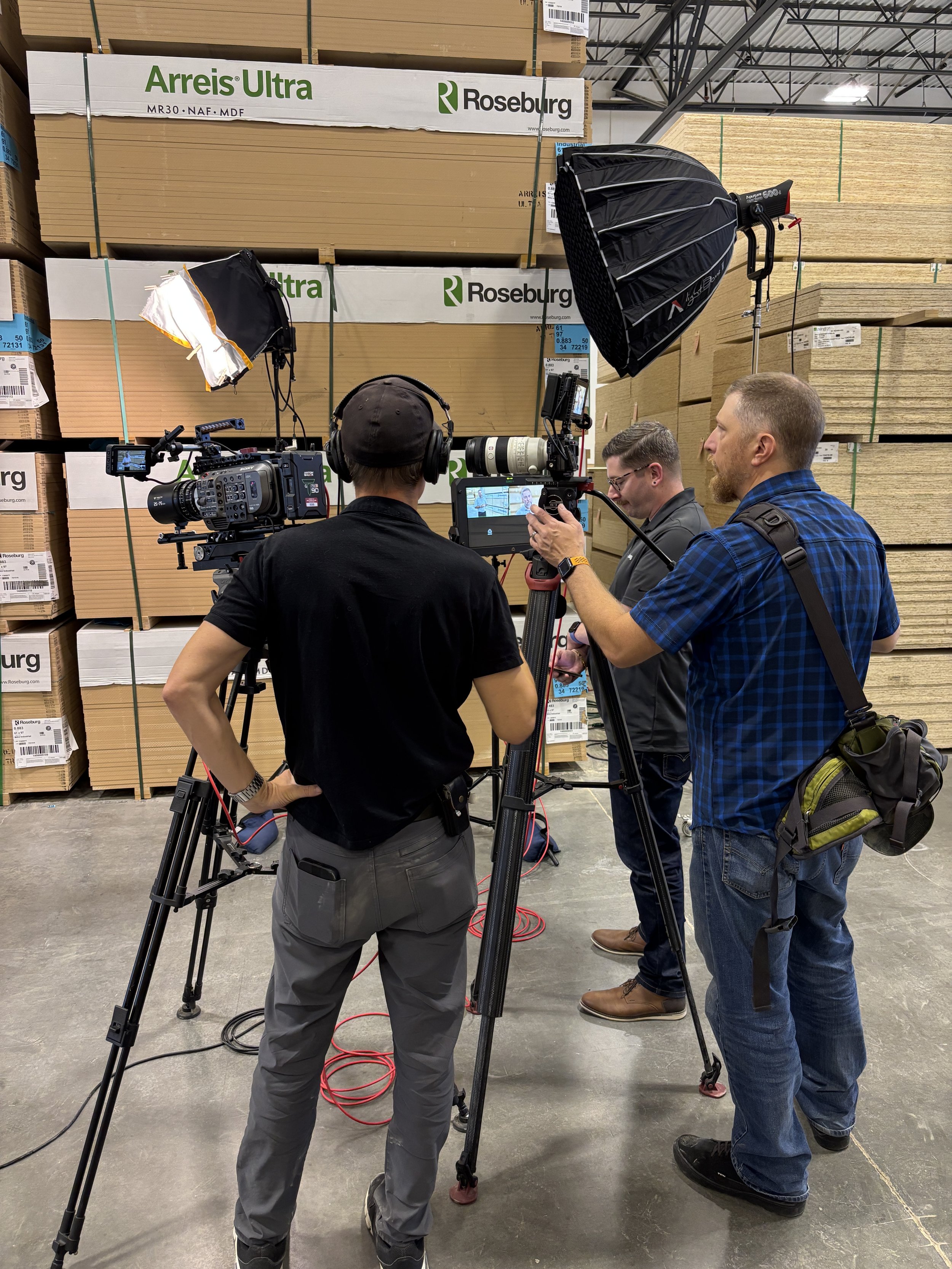
Lighting an Interview Under Industrial Fluorescents
Lighting presented an entirely different set of problems.
Many manufacturing facilities use overhead fluorescent lighting with color temperatures somewhere around 4400K. Knowing this, I originally planned to use our Aputure 600D as the primary interview light.
The 600D is a powerful daylight-balanced fixture operating at 5600K. My plan was to use its output to overpower the existing overhead lighting on our subject, allowing us to set the camera's white balance for daylight and create a clean, controlled look.
Unfortunately, the facility's fluorescent lights were warmer than expected, closer to 4000K.
At a 5600K white balance, our subject looked fine under the Aputure, but the background took on an unattractive warm color cast. The difference between the foreground and background lighting was simply too noticeable.
Turning off the overhead lights wasn't an option. The facility was still operating, and those lights were essential for the employees working there.
So we changed our approach.
We turned off the 600D and switched to a bi-color Litepanels Astra with a softbox. This allowed us to match the color temperature of the existing industrial lighting much more closely.
The Astra didn't have enough output to significantly darken the background through exposure control, something I would have preferred for a more dramatic image. But the resulting shot was still attractive, with natural color and a consistent look throughout the space.
Sometimes a successful lighting setup isn't about forcing the environment to match your original vision. It's about recognizing the limitations of the location and finding the best solution with the tools available.
One Simple Flag Made a Huge Difference
Perhaps the most important lighting decision of the day had nothing to do with which fixture we used.
The overhead fluorescents were shining directly down onto our interview subject, creating unflattering shadows around his eyes and washing out much of the shape we were trying to create with our key light.
We solved this by positioning a solid flag directly above his head.
The flag blocked the overhead light from striking his face, allowing our softbox to become the dominant source of illumination. Suddenly, we had much better control over the direction, contrast, and overall quality of the light.
It was a simple adjustment, but it made an enormous difference in the final image.
There was one tradeoff. The flag occupied some of the space where we would ideally have positioned our boom microphone, forcing us to compromise slightly on boom placement.
Fortunately, the audio still sounded great, and the improvement in the lighting was well worth it.
It's a good example of how video production often involves balancing competing priorities. Camera, lighting, sound, and safety all have to work together, and improving one element sometimes requires adjustments to another.
Learning From Every Shoot
One of the things I love about video production is that there's always something to learn, even after 25 years in the business.
When I got home that evening, I realized there was a gap in our lighting kit. We had a powerful daylight-balanced fixture and a versatile bi-color light, but we didn't have a fixture that could deliver both adjustable color temperature and the output needed to overpower challenging ambient lighting.
So I ordered an Aputure STORM 400x.
The STORM gives us the flexibility to dial in the color temperature to match the existing environment while still providing enough output to control exposure and darken the background when needed. It's exactly the kind of tool that would have made a difference on this shoot.
And that's an important part of how we approach our work at Mile High Films. Every production is an opportunity to evaluate our equipment, refine our techniques, and identify ways to improve.
Recognizing gaps in our capabilities and addressing them is one of the keys to our success. Investing in better equipment isn't just about having the latest gear. It's about being better prepared for the next challenge and consistently delivering better results for our clients.
Why Experience Matters in Corporate Video Production
Every location presents different challenges, and industrial manufacturing facilities are among the most demanding environments for filming professional interviews.
There's rarely a perfect solution waiting for you when you arrive. You have to assess the space, understand the limitations, and make adjustments as conditions change.
On this shoot, our original lighting plan didn't work, our lavalier microphone wasn't delivering the sound we wanted, and our overhead flag complicated our boom placement.
But by adapting our approach, we were able to create a professional-looking interview with excellent audio, all while allowing the manufacturing operation to continue uninterrupted.
That's what experienced location production is all about.
At Mile High Films, we're a Denver video production company specializing in corporate video, customer testimonials, executive interviews, and commercial videography. Whether we're filming in a quiet office, a busy manufacturing facility, or an active construction site, our goal is always the same: to create compelling images and capture great sound while respecting the environment we're working in.
Looking for a Denver videography team for your next corporate video, manufacturing project, or customer testimonial? We'd love to help bring your story to life.