
Corporate Awards Show Videography: A Case Study in Planning and Coverage
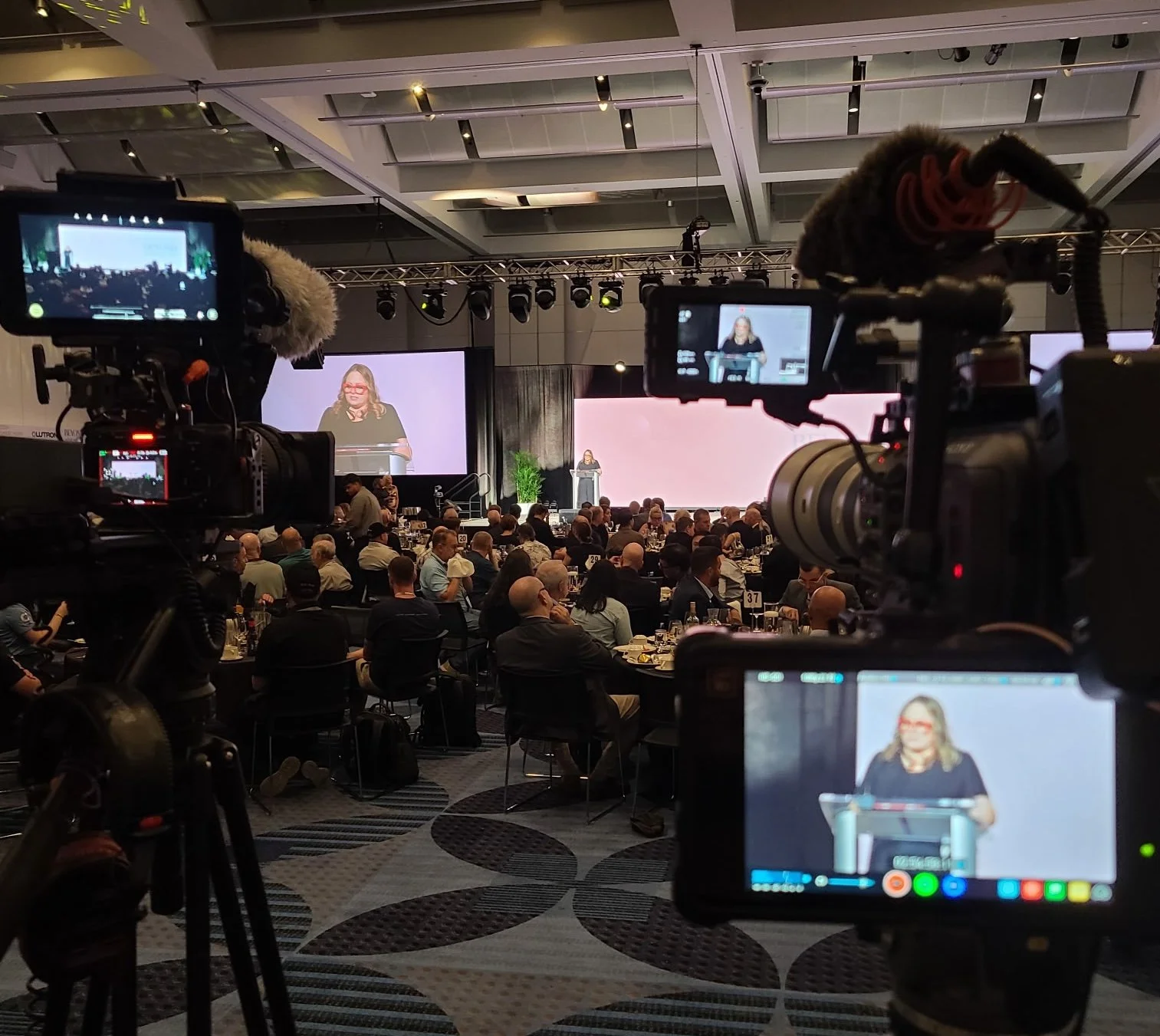
Corporate awards shows can look straightforward from the audience: a stage, a presenter, winners walking up to receive their awards, and plenty of celebration. From a video production standpoint, however, there are a lot of moving pieces that have to come together at exactly the right time.
For a recent corporate awards show with approximately 400 guests, Mile High Films provided a two-person video production crew with three cameras, dedicated audio recording, gimbal coverage, and on-the-fly interviews with attendees, VIPs, and award winners.
The key to making it all work was preparation.
Arrive Early — and Have a Plan to Get In
For event videography, arriving early is one of the simplest and most important things you can do.
At a large hotel or conference venue, getting to the building is only the beginning. You may still need to unload equipment, find the correct loading entrance, get a cart inside, navigate service hallways or elevators, and locate the right ballroom.
We try to pack only what we actually need for the production and know in advance how we are going to move it into the venue. A two-person crew can move quickly, but only if the equipment package is organized and manageable.
You do not want to discover 30 minutes before doors open that your ballroom is on the opposite side of a convention center.
Know the Run of Show
Before filming begins, the video crew needs to understand much more than simply when the awards ceremony starts.
We coordinated with the client beforehand to understand the full run of show, including the timing of the reception, interviews, awards presentations, and other important moments.
Because we were also capturing short interviews with attendees and award winners, we needed to know who the VIPs, board members, and award recipients were — and ideally where they would be sitting.
This becomes especially important in a ballroom with hundreds of guests. When someone wins an award, the camera operator needs to know where to look before that person starts celebrating or walking toward the stage.
Knowing the people and the schedule allows an event videography crew to anticipate moments instead of constantly reacting to them.
Coordinate With the Venue Audio Team Early
High-quality audio is critical for any corporate video, particularly an awards show where speeches and presentations are a major part of the event.
For this production, we connected our Zoom F3 digital audio recorder directly to the venue's audio mixer. We always try to make that connection as early as possible.
The venue's audio engineers have a lot to manage as showtime approaches. Getting your audio feed established early means you can confirm the signal, check your recording levels, and then leave the production audio team alone to do their job.
It is also important to be polite and clear about what you need. Make sure you are receiving the correct feed and that the output level being sent to your recorder is appropriate.
Once everything is confirmed, the goal is to set it and forget it.
Three Cameras, Three Different Jobs
A large awards show benefits tremendously from a multi-camera approach. For this event, each camera had a specific purpose.
A-Camera: Stage Coverage
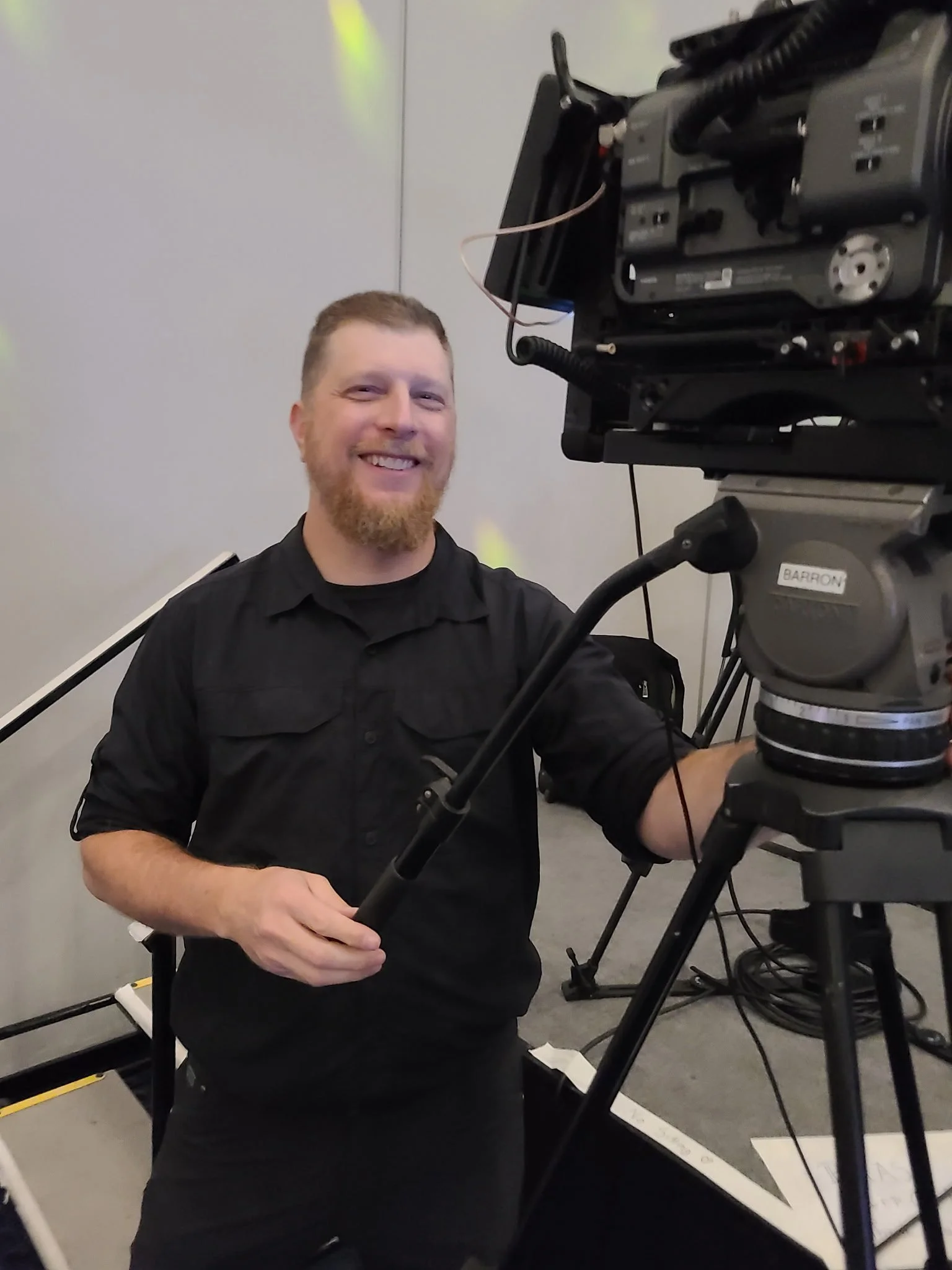
Our primary camera was a Sony FX9 on a tripod with a 200–600mm lens.
In a large ballroom, that long lens gives the camera operator the ability to capture tight shots of presenters and award recipients from well behind the audience without interfering with the event.
This was our primary stage camera throughout the awards program.
B-Camera: Reactions and Details
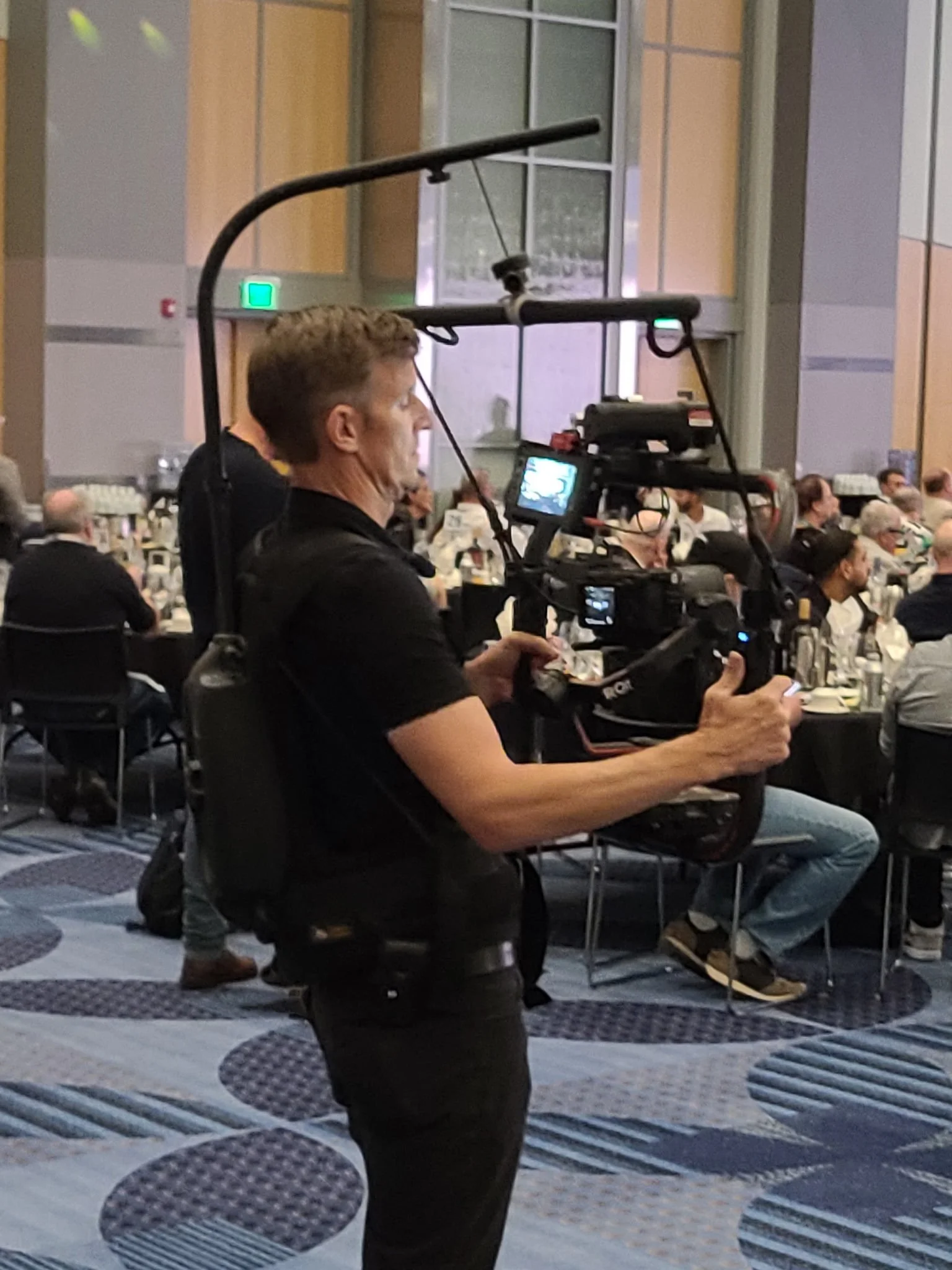
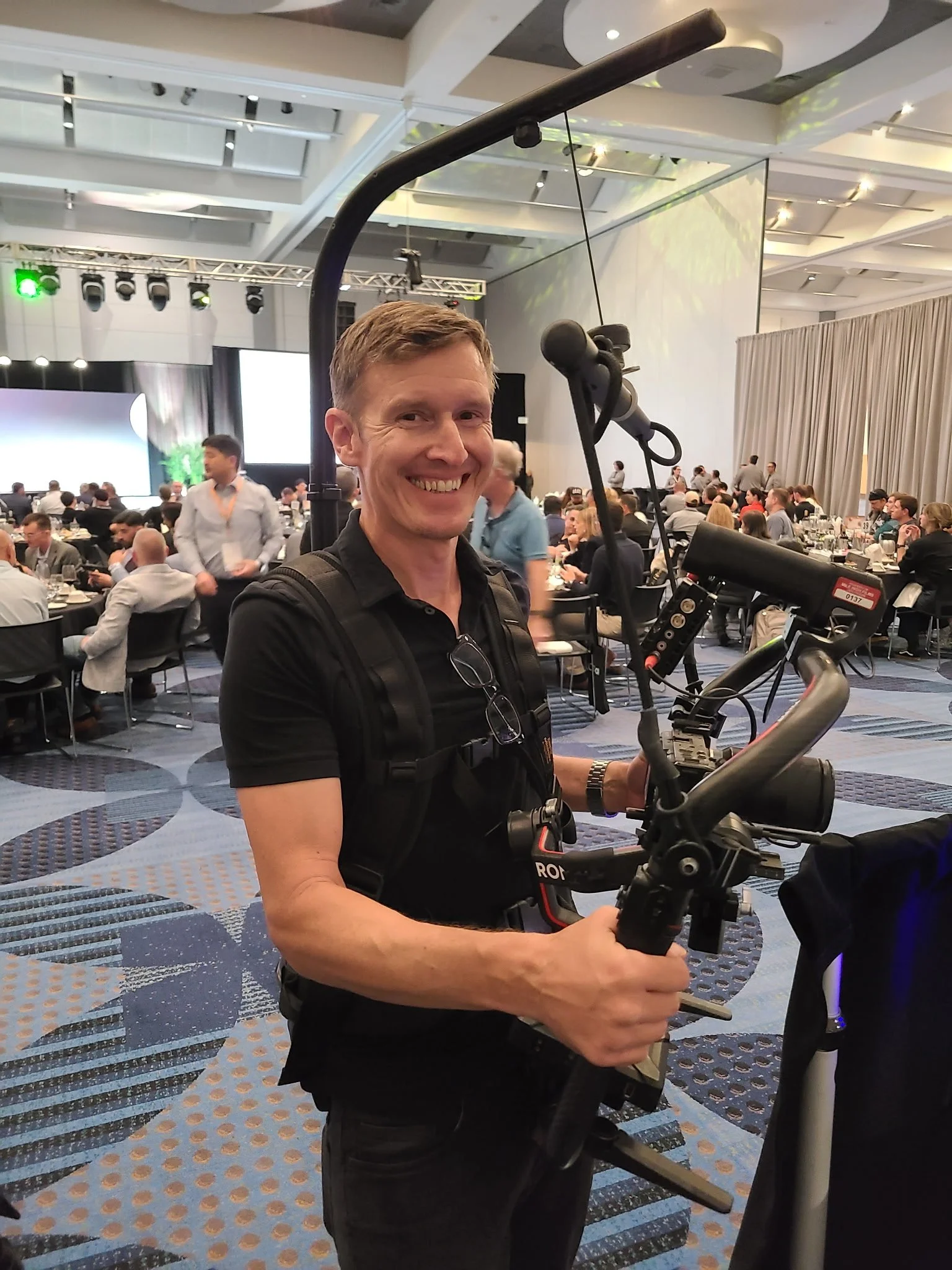
Our second camera was a Sony FX3 mounted on a gimbal.
While the A-camera concentrated on the stage, the B-camera could move through the ballroom capturing the other half of the story: audience reactions, winners celebrating at their tables, applause, details, and candid moments throughout the room.
Those shots are especially important when editing an awards show recap. The stage presentation tells you what happened. The reaction shots show you how it felt.
C-Camera: Interviews — Then a Wide Shot
The third camera was another Sony FX3 with a 24–70mm lens on a tripod. Before the awards ceremony, this camera served as our dedicated interview setup.
We paired it with a shotgun microphone and carried a battery-powered tube light that allowed us to quickly improve the lighting wherever an interview needed to happen.
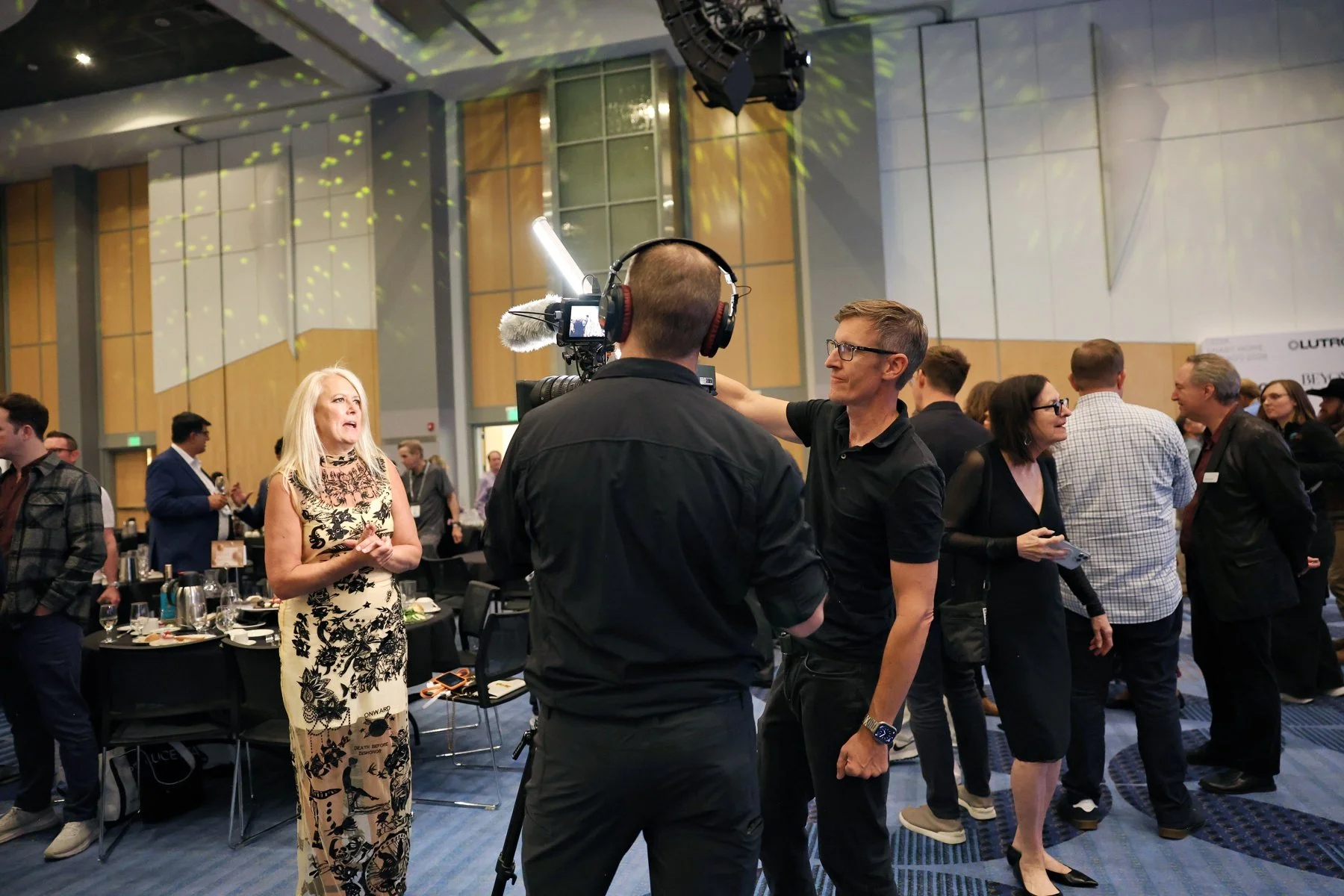
That flexibility was critical because all of our initial interviews needed to be completed before the show began. Meanwhile, the A- and B-cameras could already be positioned, tested, and waiting for the program to start.
Once the awards began, the C-camera changed jobs. We converted it into a locked-off wide shot of the stage, giving us additional coverage for moments when large groups of winners came onstage.
After the ceremony, we converted it back into an interview camera and captured additional interviews with VIPs and award recipients.
Give Every Camera a Purpose
One of the biggest lessons from this type of corporate video production is that adding cameras only helps when each one has a defined job.
For this event:
The A-camera captured reliable, tight stage coverage.
The B-camera captured reactions, movement, and details.
The C-camera handled interviews before and after the program and provided a safety wide shot during the ceremony.
That division of responsibilities allowed a two-person crew to capture a much larger event efficiently without creating an unnecessarily large production footprint.
Successful Event Videography Is About Anticipation
The technical side of Denver videography matters: cameras, lenses, audio recorders, lighting, and stabilization all play an important role.
But successful corporate event videography is ultimately about preparation and anticipation.
Know the schedule. Know the room. Know where the important people are sitting. Coordinate with the venue crew early. Have your cameras ready before the program begins. And build enough flexibility into the production plan that equipment can serve more than one purpose throughout the event.
When an award winner's name is announced, there is no second take.
Good event video production puts the cameras in the right place before that moment happens.