
Setting the Scene: When Videography Becomes Interior Design
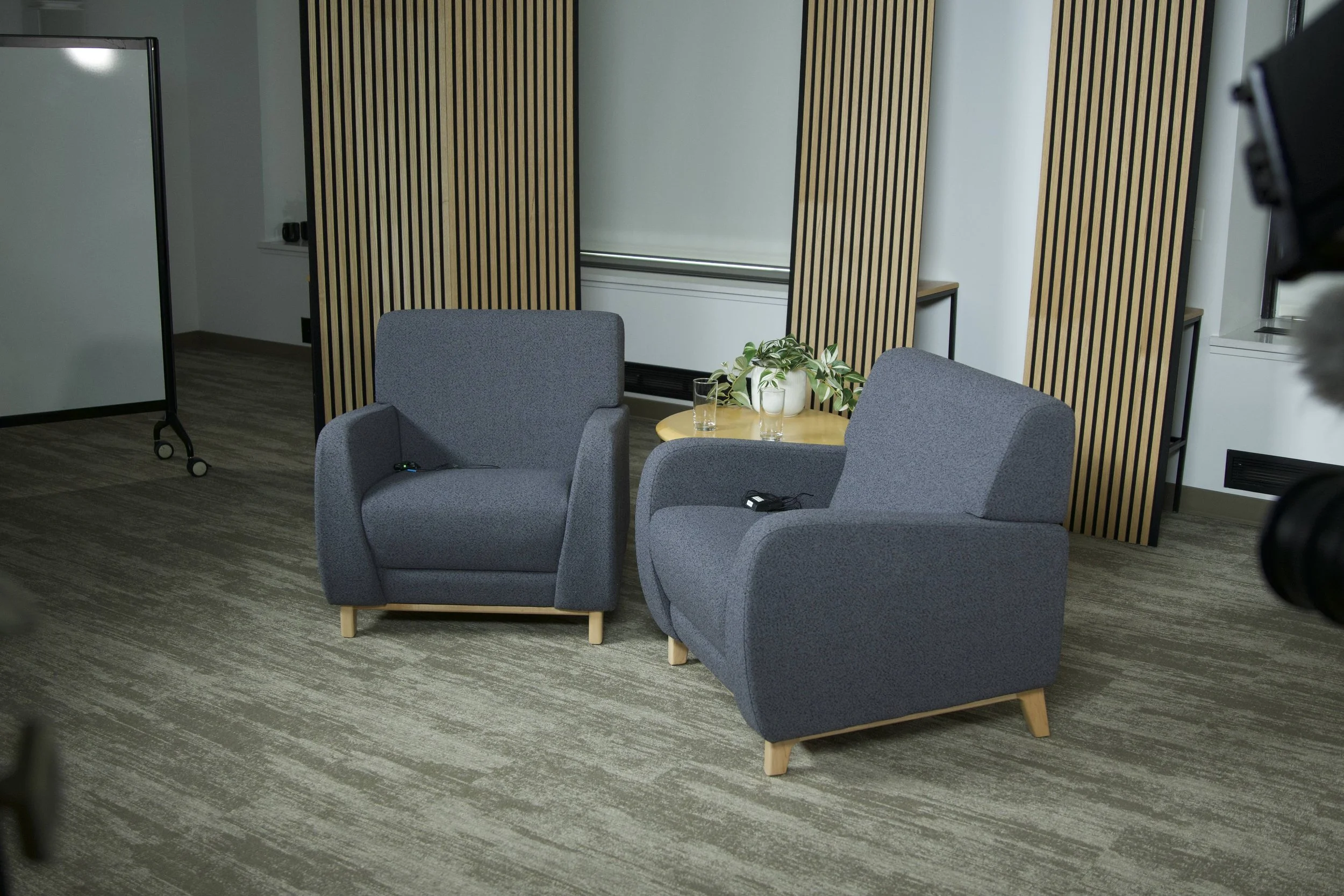
When people think about videography, they picture cameras, lighting setups, and audio gear. And yes—those are essential. But any experienced Denver videographer knows that the technical side is only part of the job.
The environment matters just as much. Sometimes more.
And occasionally, delivering a strong final product means stepping into a completely different role: interior designer.
The Situation
We were brought in to film a conversation between two corporate executives. The content was solid. The people on camera were great.
Then we saw the room.
A large, empty white space. No depth. No texture. Nothing that would translate visually on camera.
At that point, it didn’t matter how polished the lighting would be or how clean the audio sounded. Even with perfect execution, the video would feel flat. And when a video feels flat, clients feel it too.
That’s something every best videographer learns over time—great videography isn’t just about what you shoot. It’s about what’s behind your subject.
Why the Environment Can Make or Break a Video
In corporate videography, the background is never neutral. It’s always saying something.
A blank white wall says very little—and what it does say isn’t usually helpful.
It strips away personality. It removes context. It creates a sterile look that doesn’t reflect the people or the brand on screen.
For teams focused on the best Denver video production, that kind of environment immediately becomes part of the challenge. Because the final product has to feel intentional in every frame.
Taking Ownership (Even When It’s Not “Your Job”)
Technically, the client provided the space. You could argue the environment isn’t the videographer’s responsibility.
But in practice, it is.
Because the client isn’t going to separate “bad room” from “good videography.” They’re going to judge the final video as a whole.
So if the space isn’t working, it’s on us to fix it.
That’s where videography becomes problem-solving.
We started by walking the office and gathering anything that could help shape the frame—plants, tables, alternate seating. Anything that could add depth and break up the emptiness.
Then we connected with the facilities team. That changed everything.
Building a Set from Scratch
Facilities led us to a storage area where we found six acoustic panels. Not intended for video production—but exactly what we needed.
We borrowed stools from the cafeteria, propped the panels up, and built a layered background that pulled us completely away from the white walls.
In a matter of time, the space transformed from empty and sterile to structured and intentional.
This is the kind of adaptability that defines strong videography. To be the best videographer, don’t wait for the perfect environment— create it. It’s also the kind of behind-the-scenes thinking that separates average crews from those known for the very best Denver video production.
The Hidden Time Investment
We had 2.5 hours to set up.
From a technical standpoint, we only needed about 30 minutes to dial in cameras, lighting, and audio.
But shaping the environment took 90 minutes.
That’s the part many people don’t see. And it’s often the part that has the biggest impact on the final image.
For any videographer in Denver working at a high level, this is part of the process. The scene has to be built before it can be captured.
What Clients Actually Respond To
Clients don’t analyze lighting ratios or lens choices. They respond to how the video feels.
If the environment looks polished, intentional, and aligned with their brand, the video feels high-end.
If it looks like an empty room, no amount of technical precision can fully compensate.
That’s why the difference between average work and the best Denver video production often comes down to decisions made before the camera ever rolls.
The Mile High Films Approach
At Mile High Films, we approach every project with the full frame in mind.
That means thinking beyond traditional videography and taking ownership of the environment when needed. It means collaborating with teams on-site, finding creative solutions, and shaping the scene so it supports the story.
This level of attention to detail is one of the things that makes Mile High Films one of the best video production companies in Denver.
Because great videography isn’t just about capturing what’s there.
It’s about recognizing what’s missing—and building it.